How Deep Are Water Lines Buried in Massachusetts?
September 25, 2026
give us a call at

Most water service lines in Massachusetts are buried with at least 5 feet of cover, and some towns require more. Hanover, for example, requires service lines at no less than 5 1/2 feet. The state plumbing and residential codes set a lower floor, requiring water service pipe to sit at least 12 inches deep and 6 inches below the frost line, but local water departments set the depth you actually have to meet. Public water mains in the street are usually buried at a similar depth, often 5 to 6 feet. Always confirm your town's rules and call Dig Safe before any digging.
DGL Contracting LLC has been trenching and excavating across the South Shore since 1993, and we are licensed to perform water line installation and repair, which many landscapers and general contractors are not. From our shop in Rockland, we dig water service trenches, drainage systems, and utility runs in Hanover, Norwell, Abington, Whitman, Weymouth, and surrounding towns. This guide explains how deep each kind of line usually sits and why.
In This Guide
- Typical Depths by Line Type: A quick reference.
- Why 5 Feet? Frost Depth in Massachusetts: What freezing does to shallow lines.
- Why Your Town's Rules Matter Most: Local standards vs. state code.
- How to Find Your Water Line Before You Dig: Locating a buried service.
- Projects That Put Water Lines at Risk: Common ways lines get hit.
- Signs Your Water Line May Be Too Shallow: What to watch for.
- Installing or Replacing a Water Line: What the job involves.
- Frequently Asked Questions: Quick answers.
Typical Depths by Line Type
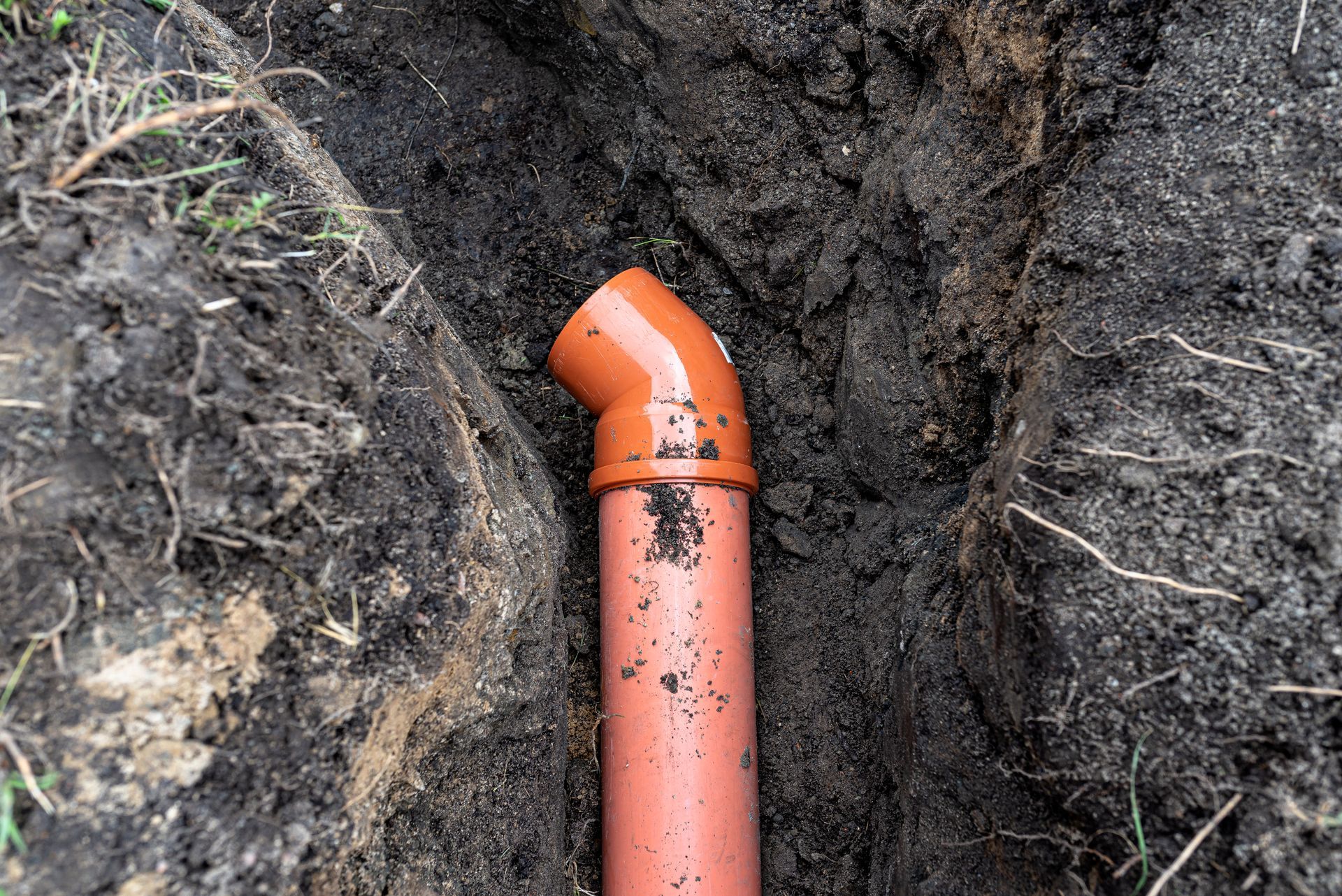
Not every buried line on a property sits at the same depth. Water lines go deep to stay below the frost. Other utilities often run much shallower. The table below gives typical ranges, but your town, utility company, and the conditions on your site decide the actual depth.
| Line Type | Typical Depth in Massachusetts | Who Usually Sets the Requirement |
|---|---|---|
| Public water main (street) | About 5 to 6 feet of cover | Town or city water department |
| Water service line (street to house) | At least 5 feet, sometimes 5 1/2 feet or more | Local water department and plumbing code |
| Private well supply line | Below the frost line, often similar to service lines | Plumbing code and well installer |
| Irrigation lines | Often under a foot | Installer, since lines are drained each fall |
| Electrical conduit and cable | Often 18 to 24 inches, depending on type | Electrical code and utility |
| Sewer lateral | Varies with slope from house to street | Sewer department and plumbing code |
The key point for homeowners: finding a shallow pipe does not mean you found the water line. You may have hit an irrigation line or conduit. The water service is usually deeper. Irrigation lines stay shallow because they are blown out before winter, which is one reason fall
irrigation service matters.
Why 5 Feet? Frost Depth in Massachusetts
Water lines are buried deep for one main reason: to keep them from freezing.
How Deep the Ground Freezes
In a hard Massachusetts winter, frost can reach several feet into the soil, especially under driveways, walkways, and plowed areas where snow does not insulate the ground. Building design in the state commonly assumes a frost depth of about 4 feet. Water departments add a safety margin on top of that, which is why 5 feet of cover is the standard in so many towns.
What Happens When a Line Is Too Shallow
A water line that sits too close to the surface can freeze solid, stop the flow to the house, and in the worst case split the pipe. The problem often shows up during a long cold snap rather than the first freeze. Frozen or burst service lines are expensive to fix in winter because the ground itself is frozen and has to be dug through.
Grade Changes Reduce Cover
This is the part many homeowners never think about. A water line installed at 5 feet years ago may not have 5 feet of cover today. Regrading a yard, cutting in a patio, lowering a lawn to fix drainage, or widening a driveway can all remove soil above the line. We check this before regrading any property, because the line itself does not move, but the ground above it does. If you are planning
grading and new lawn installation, make sure your contractor accounts for buried utilities.
Why Your Town's Rules Matter Most
Massachusetts sets a statewide minimum, but individual water departments usually require more.
The State Minimum
The Massachusetts residential code, which points to the state plumbing code for plumbing work, requires water service pipe to be at least 12 inches deep and at least 6 inches below the frost line. That is a floor, not the number most towns use.
Local Water Department Standards
Most Massachusetts towns publish their own water service rules. Hanover requires service lines at a depth of at least 5 1/2 feet in a trench dug to at least 6 feet, with sand bedding and cover, and does not allow other utilities in the same trench. Other towns across the state, including Concord and Topsfield, require at least 5 feet of cover. Many departments also require sand bedding, tracer tape or wire so the line can be located later, and an inspection before backfilling.
Where Responsibility Changes
The town usually owns the main and the service up to the curb stop, which is the shutoff valve typically near the property line. The line from the curb stop to your house is usually the homeowner's responsibility. That matters when a line leaks or needs replacing, because it determines who pays for the work and who needs to be involved. On properties with a private well, there is no curb stop, and the entire line from the well to the house belongs to the owner, including keeping it deep enough to avoid freezing.
How to Find Your Water Line Before You Dig
Knowing roughly how deep a line should be is not the same as knowing where it is. Before any digging:
- Contact Dig Safe by calling 811 at least 72 hours before you dig, not counting weekends and holidays, and mark your planned dig area in white paint first.
- Know what Dig Safe does not mark. Member utilities mark their own lines, but private lines, such as the water service from the curb stop to your house, a well line, or irrigation, are often not marked.
- Find the curb box, a small metal cap usually near the street or sidewalk. The service line generally runs from there toward where the pipe enters your basement.
- Check where the line enters the house, usually a pipe coming through the foundation wall near the water meter.
- Ask your water department for records. Many towns keep tie cards or service records with measurements to the curb stop.
- Hire a private utility locator for lines Dig Safe will not mark, especially before major excavation.
Even with all of these steps, marks show approximate locations, not exact depths. Hand digging near marked lines is the safest approach.
Projects That Put Water Lines at Risk
Most water line damage we see on residential properties does not come from deep excavation. It comes from everyday projects that happen to cross the line:
- Patio and walkway excavation, especially when base depth is added to a lowered grade. Our guide to walkway excavation depth explains how deep those projects go.
- Retaining wall footings and the drainage stone behind them.
- French drains and drainage trenches, which often run parallel to or across the service line. See our guide on how to fix yard drainage for how these are laid out.
- Fence posts and deck footings, where an auger can hit a line in seconds.
- Tree and shrub planting with larger root balls.
- Lowering or regrading a yard, which reduces the cover over the line.
If a project crosses the path from the curb box to your house, locate the line first. Repairing a punctured water service costs far more than an hour spent finding it.
Signs Your Water Line May Be Too Shallow or Failing
Older properties on the South Shore sometimes have service lines that were installed shallower than today's standards, or lines that have lost cover after years of landscaping changes. These signs are worth a closer look:
- No water during a deep cold snap, especially if it returns once temperatures rise. That pattern points to a line freezing somewhere between the curb stop and the house.
- A line that freezes under the driveway but nowhere else, since plowed pavement lets frost drive deeper.
- A soggy strip of lawn running from the street toward the house when it has not rained.
- A sunken line or depression along the path of an old trench.
- Dropping water pressure or a water bill that climbs without a change in use.
Any of these can have other causes, but they are good reasons to have the line located and checked before the next winter.
Installing or Replacing a Water Line
New construction, a failing old line, or a switch from a private well to town water can all require a new water service.
Permits and Inspections
Water line work in Massachusetts usually requires permits and coordination with the local water department. Many towns require that the department inspect the line before the trench is backfilled, and some require their own staff to make the final connection to the main. A contractor familiar with local requirements can save weeks of back and forth.
Digging on the South Shore
Soil conditions here change from one street to the next. Some properties have sandy soil that digs easily but needs shoring in deeper trenches. Others hit ledge, boulders, or clay, which slows the work and may require different bedding. In areas with a high water table, some towns call for crushed stone bedding instead of sand. Trenches more than a few feet deep also need proper safety measures to protect anyone working in them.
Trenching and Alternatives
Most service lines are installed with an open trench. In some situations, such as crossing under a finished driveway or mature landscaping, trenchless methods may be an option. The right approach depends on the site, the distance, and what the water department allows. Learn more about our
drainage and trenching services and
small excavation work.
Talk to DGL About Your Water Line Project
Whether you need a new water service, a repair, or just want to know where your line runs before a patio or drainage project, our team can help you plan the work around local requirements. We handle the excavation, coordinate the permitting process, and dig at the depth your town requires. See more of our excavation and sitework services or browse our project gallery.
Call DGL Contracting at (781) 985-4535 or
contact us
for a free estimate in Rockland and across the South Shore.
Frequently Asked Questions
How deep does a water line need to be in Massachusetts?
Most Massachusetts water departments require at least 5 feet of cover over a water service line, and some require more. Hanover, for example, requires at least 5 1/2 feet. The state code minimum is 12 inches deep and 6 inches below the frost line, but local rules usually set the actual depth.
What is the frost line depth in Massachusetts?
Building design in Massachusetts commonly uses a frost depth of about 4 feet. Actual frost depth varies with the winter, soil type, and snow cover, and it can go deeper under plowed driveways and walkways. That is why water lines are typically buried at 5 feet or more.
Does Dig Safe mark private water lines?
Usually not. Dig Safe notifies member utilities, which mark their own lines. Private lines, such as the water service from the curb stop to your house, well lines, and irrigation, are generally the owner's responsibility to locate, often with a private utility locating service.
Who is responsible for the water line from the street to my house?
In most Massachusetts towns, the water department is responsible for the main and the service up to the curb stop, usually near the property line. The line from the curb stop to the house is typically the homeowner's responsibility. Check your town's water rules to confirm.
Can I bury a water line in the same trench as other utilities?
It depends on the town and the utility. Some towns, including Hanover, do not allow other utilities in the same trench as a water service. Separation rules for water and sewer lines also apply. Check with your water department before planning a shared trench.
Recent Posts