Hydroseeding vs. Sod: Which Is Better for a New Lawn?
August 29, 2026
give us a call at

Sod gives you an instant, usable lawn the day it is installed, but it costs the most. Hydroseeding is far more affordable and works beautifully on large or sloped areas, but it takes several weeks to establish and needs careful watering while it does. The right choice comes down to your budget, how fast you need a finished lawn, and the size and slope of the area.
At DGL Contracting, we install new lawns across Rockland and the South Shore of Massachusetts, and we offer both hydroseeding and sod as part of our grading and new lawn installation work. With over 30 years in the industry, we have put in enough lawns to know which method fits which situation. This guide lays out the real tradeoffs so you can decide with clear expectations.
In This Guide
- Hydroseeding vs. Sod at a Glance: The quick comparison.
- What Is Hydroseeding?: How it works and where it shines.
- What Is Sod?: How it works and its tradeoffs.
- Cost Comparison: What each really costs.
- Which Is Better for Your Lawn?: Choosing by your situation.
- Preparing the Ground Comes First: Why site prep decides the result.
- Caring for a New Lawn After Installation: The critical first weeks.
- Timing a New Lawn in Massachusetts: When to install either one.
- Frequently Asked Questions: Quick answers for homeowners.

Hydroseeding vs. Sod at a Glance
Both methods produce a healthy lawn when the soil is prepared correctly, and both start with the same foundation of grading and topsoil. Where they differ is speed, cost, and how much patience the process requires. The table below sums up the practical differences before we get into each one.
| Factor | Hydroseeding | Sod |
|---|---|---|
| Time to usable lawn | Several weeks to establish | Instant, ready in a couple of weeks |
| Relative cost | Lower, budget-friendly | Higher, premium option |
| Best for slopes and large areas | Excellent | Workable but labor-intensive |
| Early watering demands | High and consistent | High but shorter window |
What Is Hydroseeding?
Hydroseeding applies a wet slurry of grass seed, fertilizer, mulch, and water in a single pass, coating the prepared soil evenly. The mulch holds moisture against the seed and protects it, giving the seed everything it needs to germinate quickly and fill in evenly from the start. It is a step up from traditional dry seeding because coverage is consistent and the seed is protected while it takes hold.
Where Hydroseeding Shines
Hydroseeding is the standout choice for large yards and sloped ground. It covers wide areas quickly and affordably, and the mulch layer resists washout on grades where loose dry seed would simply run off. Because you choose the seed blend, you can also match the grass precisely to your conditions, whether that is sun, shade, or high traffic.
The Tradeoffs
The catch is time and attention. A hydroseeded lawn needs several weeks to establish and demands consistent watering during that window, since letting it dry out can ruin germination. You also cannot walk on it or use it heavily until it fills in, so it asks for patience the sod route does not.
What Is Sod?
Sod is mature grass grown on a farm and harvested in rolls with the roots and a thin layer of soil intact. It is laid directly onto prepared ground, where it knits into the soil over the following weeks. The defining feature is immediacy: the moment it is down, you have a green, finished-looking lawn.
Where Sod Shines
Sod wins when you need a lawn now. It is ideal for smaller high-visibility areas, for homeowners selling or hosting on a deadline, and for stopping erosion instantly on a bare slope. It also gives you a uniform, weed-free surface from day one, since the grass is already grown.
The Tradeoffs
That instant result comes at a premium price, driven largely by the material and the labor to lay it. Sod also has a narrower window to root before it dries out, so the first couple of weeks of watering are critical. On very large areas the cost and labor add up quickly, which is often where hydroseeding pulls ahead.
Cost Comparison
Cost is usually the deciding factor, so it helps to understand roughly how the two compare. Treat these as ballpark ranges, since your actual price depends on the site prep involved, the size and shape of the area, and current material costs. A precise number comes from an on-site estimate.
Hydroseeding typically runs in the range of a few cents to around 20 cents per square foot for the application itself, which makes it the budget-friendly option, especially over large areas. Sod generally lands well higher, often in the range of roughly 1 to 2 dollars or more per square foot installed, because you are paying for mature grass and the labor to lay it. On a small front yard the difference may be modest, but across a large property it becomes substantial, which is why big or sloped lawns so often go the hydroseeding route. Keep in mind that both figures assume the ground is already graded and prepped; the site work underneath is a separate and important part of the total. It is also worth weighing the long game: hydroseeding's savings are real up front, while sod buys you a finished lawn and a shorter, lower-risk establishment period, which has its own value if a bare, muddy yard for a month is not an option for your household.
Which Is Better for Your Lawn?
There is no single winner, only the right fit for your situation. Running through a few common scenarios makes the choice clearer.
- On a tight budget or a large area, hydroseeding is usually the better value by a wide margin.
- On a deadline or a high-visibility spot, sod delivers a finished lawn immediately.
- On a slope with erosion concerns, hydroseeding's mulch resists washout, though sod can lock a slope down instantly if the budget allows.
- Wanting a specific grass blend, hydroseeding lets you tailor the seed to sun, shade, or traffic.
- Unable to water diligently for weeks, sod's shorter establishment window may suit you better.
The one constant either way is the ground underneath. A lawn is only as good as the grading and topsoil beneath it, which is why we treat proper
grading and new lawn installation as the real foundation of the result, whichever surface goes on top.
Preparing the Ground Comes First
Whichever surface you choose, the work that happens before it goes down decides how the lawn turns out. Both sod and hydroseeding fail on poor ground and thrive on good ground, so this stage is not optional.
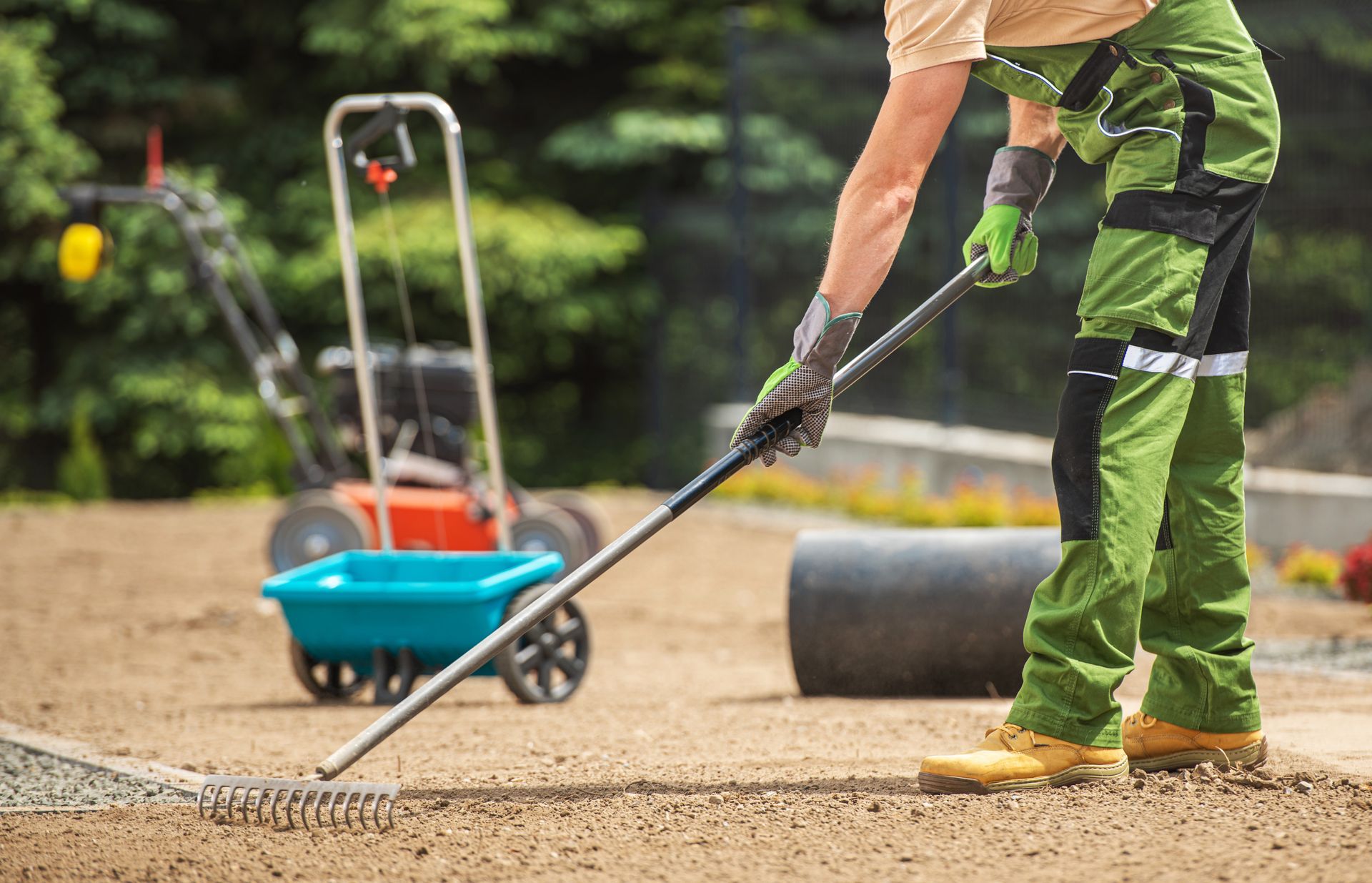
Good preparation means clearing the area of old grass, weeds, and debris, then grading the soil so it drains away from the house and has no low spots that will pool water. Quality topsoil is spread and leveled to give roots something to grow into, and the surface is loosened so seed or sod can knit in rather than sit on hardpan. A soil that is compacted, rocky, or graded toward the foundation will undermine even a perfect installation. This is the part homeowners rarely see in a finished lawn, but it is where the durability comes from, and it is why we treat grading and soil prep as the real foundation of the job.
Caring for a New Lawn After Installation
The first few weeks after installation matter more than anything else you will do for the lawn, and the care differs slightly by method.
For a hydroseeded lawn, keep the surface consistently moist, watering lightly and often so the seed never dries out, until the grass has germinated and begun to fill in. For sod, water deeply and daily at first so moisture reaches the roots and helps them knit into the soil below, then taper off as it establishes. In both cases, stay off the new lawn as much as possible early on, since foot traffic disturbs seed and shifts sod before it has anchored.
- Hold off on the first mow until the grass reaches roughly three inches, and never cut more than a third of the blade height at once.
- Wait to fertilize heavily beyond the starter nutrients, letting the lawn establish before pushing growth.
- Keep pets and traffic light through the establishment window so the young grass can root undisturbed.
Get this window right and either lawn will reward you for years. Rush it, and even a well-installed lawn can thin out or fail. If you are unsure how much to water or when to start mowing for your specific site, it is worth asking whoever installed the lawn, since the answer shifts with the season and the weather that particular week.
Timing a New Lawn in Massachusetts
Timing matters as much as method here on the South Shore. Our lawns are cool-season grasses, which establish best when temperatures are moderate and moisture is reliable, so the prime windows are spring and early fall. Early fall is often the single best time, with warm soil, cooler air, and fewer weeds competing with new grass.
Summer is the hardest time to establish either sod or a hydroseeded lawn, because heat and dry spells stress new grass right when it is most vulnerable. If you are also planning to improve an existing lawn, our guide on
the best time to aerate your lawn covers the same seasonal logic. Whatever the calendar, consistent watering during establishment is what makes or breaks the outcome.
Start Your New Lawn With DGL Contracting
Whether hydroseeding or sod is the right call for your property, the results come from correct grading, good soil, and proper installation, which is exactly what our crew handles start to finish. We will walk your site and give you a straight recommendation for your budget and timeline.
Call DGL Contracting at (781) 985-4535 or
contact us
for a free estimate. Learn more about our
hydroseeding and lawn installation services across Rockland and the South Shore.
Frequently Asked Questions
Is hydroseeding cheaper than sod?
Yes, usually by a wide margin. Hydroseeding costs a fraction of sod per square foot because you are applying a seed slurry rather than buying and laying mature grass. The gap grows with the size of the area, which is why large and sloped lawns so often use hydroseeding, while small high-visibility areas may still justify the premium for sod.
How long does hydroseeding take to grow?
You will typically see germination within a week or two, with the lawn filling in and becoming usable over several weeks, depending on the season and how consistently it is watered. Full establishment takes a couple of months. Watering is the key variable, since letting a new hydroseeded lawn dry out during this window can undo the whole application.
Can you walk on a new lawn right away?
With sod, you can walk on it lightly almost immediately, but you should keep traffic minimal for the first two to three weeks while the roots knit in. With hydroseeding, you need to stay off the area entirely until the grass has filled in, which takes several weeks. Both benefit from limited foot traffic early on.
Is sod or hydroseeding better for a sloped yard?
Both work on slopes. Hydroseeding is popular for grades because the mulch holds seed in place and resists washout at a lower cost over large areas. Sod can also stabilize a slope, and it does so instantly, which is an advantage where erosion is an immediate concern and the budget allows for it.
When is the best time to install a new lawn in Massachusetts?
Early fall is generally the best window on the South Shore, followed by spring. Our cool-season grasses establish best in moderate temperatures with reliable moisture, and fall offers warm soil, cooler air, and less weed pressure. Summer is the most difficult time because heat and dry spells stress new grass when it is least able to handle it.
Recent Posts