How to Choose a Commercial Snow Removal Company Before Winter
September 21, 2026
give us a call at

The best commercial snow removal company for your property is one that will walk your site before the season, put a specific trigger depth and response time in writing, prove its insurance, keep a timestamped log of every visit, and has enough equipment and crew to handle back-to-back storms without dropping your lot to the bottom of the route. Price matters, but reliability during a storm matters more. Start the search in early fall, because the best contractors fill their commercial routes before the first snow, and pre-season staking should happen before the ground freezes.
DGL Contracting LLC has worked through more than 30 South Shore winters since 1993. From our base in Rockland, we plow, clear walkways, and apply de-icing materials for commercial properties across the South Shore with a 10-person crew and three front-end loaders. We keep our winter work focused on commercial accounts, and this guide covers what we would want to know if we were the ones hiring.
In This Guide
- Why Choosing Early Matters: Timing and pre-season prep.
- Your Liability in Massachusetts: Why the choice matters legally.
- Questions to Ask Before You Sign: What to ask every bidder.
- Snow Removal Contract Types: Seasonal, per-event, and more.
- What the Contract Should Spell Out: Terms to get in writing.
- Equipment and Crew Capacity: Whether they can keep up.
- Where the Snow Goes: Stacking, hauling, and drainage.
- Salt and De-Icing on the South Shore: Handling freeze-thaw.
- Red Flags to Watch For: Signs to keep looking.
- Frequently Asked Questions: Quick answers.
Why Choosing Early Matters
Most property managers start looking for a snow contractor after the first storm. By then, the most reliable companies have already committed their equipment and crews.
Capacity Fills Up in the Fall
A snow contractor can only service as many lots as its trucks, loaders, and operators can clear within the response times it promises. Good contractors cap their routes to protect those promises. If you call in December, you may be choosing from whoever still has room, which is not always a good sign.
Pre-Season Work Takes Time
A proper setup starts with a walk of your property to map plowing areas, snow storage spots, walkways, fire lanes, and hazards. Curbs, islands, drains, and low landscaping get staked so plow operators can find them under snow. Staking is much easier before the ground freezes, which on the South Shore usually means doing it by late fall. Starting in September or October also leaves time to compare proposals carefully instead of signing whatever comes first.
Your Liability in Massachusetts
Choosing a snow contractor is also a risk management decision.
The Duty to Clear Snow and Ice
In 2010, the Massachusetts Supreme Judicial Court decided Papadopoulos v. Target Corp. and ended the old rule that treated natural accumulations of snow and ice differently. Since then, property owners and those in control of a property have been held to the same duty of reasonable care for snow and ice as for any other hazard. In plain terms, an icy walkway at your entrance is your responsibility.
Hiring a Contractor Does Not Hand Off the Duty
Hiring a snow removal company does not automatically shift that responsibility to the contractor. What a good contractor gives you is a documented, reasonable program: service at a set trigger, de-icing when conditions call for it, and records showing when the property was treated. Those records are often what matters most if a slip-and-fall claim is filed months later. Talk to your insurance agent or attorney about how your contract's indemnification language should read.
Questions to Ask Before You Sign
Ask every company the same questions so you can compare their answers side by side:
- Will you walk the property before the season and stake hazards?
- What is the trigger depth, and can it be different for entrances and walkways?
- What is your guaranteed response time once the trigger is reached, and do you stay through ongoing storms?
- Do you clear walkways and apply de-icer, or only plow the lot?
- How many commercial accounts are on each route, and how many residential driveways?
- Do you subcontract any of the work? If so, who actually shows up?
- Can you provide a certificate of insurance and name us as additional insured?
- Do you log every visit with times, services performed, and materials used?
- Who do we call during a storm, and how quickly will they answer?
A contractor who gives specific answers is usually one who has thought through how storms actually go. Vague answers like "we'll be there as soon as we can" are worth noting.
Snow Removal Contract Types
Commercial snow removal is typically priced one of four ways. The right one depends on your budget, risk tolerance, and how critical your site is.
| Contract Type | How It Works | Best For |
|---|---|---|
| Seasonal (flat rate) | One fixed price for the winter, usually with a cap on events or total snowfall | Properties that want a predictable budget and route priority |
| Per-event | A set fee each time snowfall reaches the trigger depth | Properties willing to pay more in heavy winters and less in light ones |
| Per-push | A charge each time the crew plows during a storm | Sites where snowfall and storm length vary widely |
| Time and materials | Hourly rates for equipment and labor, plus de-icing materials | Complex sites or properties with unpredictable needs |
For most commercial properties, a seasonal contract offers the best combination of budget certainty and priority service. Read the fine print, though. Many seasonal contracts include a snowfall cap, with extra charges for storms or accumulation beyond it.
What the Contract Should Spell Out
A handshake agreement falls apart during the first storm that goes sideways. Your written contract should cover at least:
- A site map showing every area to be plowed and cleared, including sidewalks, loading docks, dumpster pads, and fire lanes.
- The trigger depth for the lot and, separately, for entrances and walkways.
- Response and completion times, such as the lot being cleared by a set hour before your business opens.
- De-icing terms, including when material is applied and whether it is included or billed per application.
- Snow stacking and removal, including where snow is piled and when it is relocated or hauled off-site.
- Damage and repair terms for curbs, landscaping, and turf, with a spring walkthrough to review any damage.
- Insurance requirements, including limits, additional insured status, and indemnification language.
- Service documentation, so you receive a log of each visit.
- The contract term and how the agreement renews or ends.
Clear terms protect both sides. They prevent disputes over what was promised and give you something concrete to point to if service falls short.
Equipment and Crew Capacity
A great contract means nothing if the company cannot deliver it during a nor'easter.
Match the Equipment to the Site
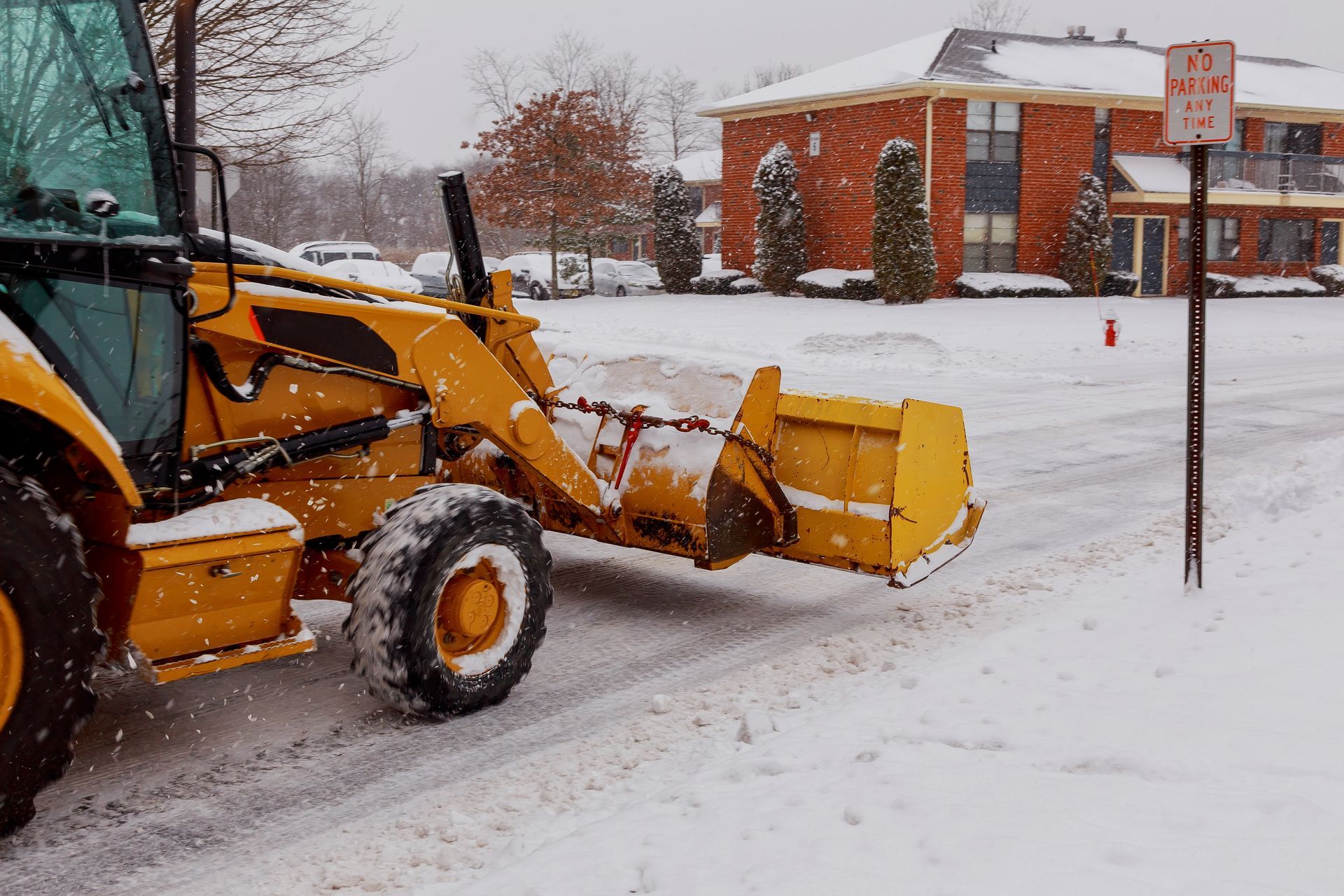
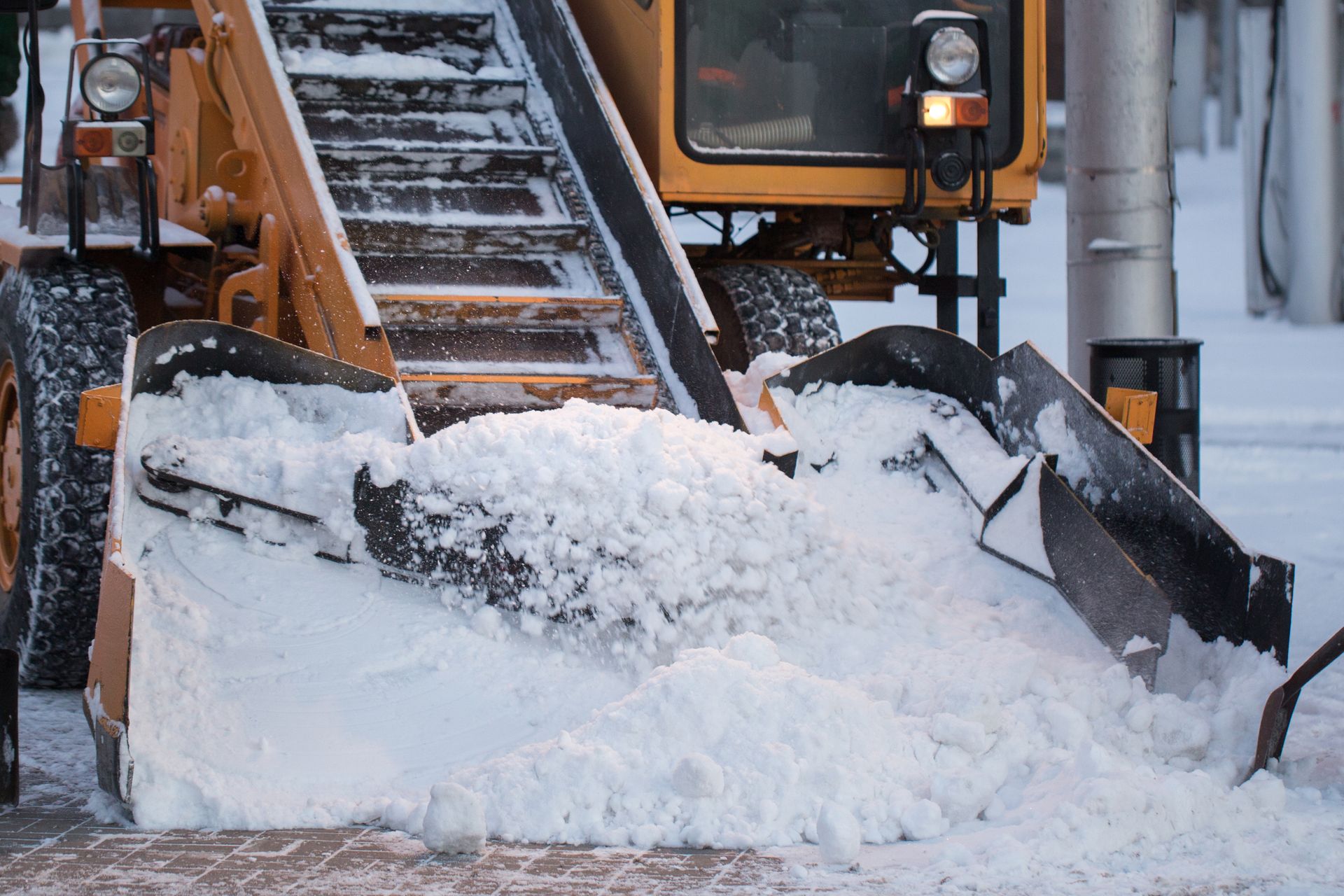
Pickup trucks with plows work well for smaller lots and drive lanes. Larger lots, heavy storms, and snow stacking often call for loaders, which can push, lift, and relocate snow that trucks cannot move. Walkways need a separate crew with shovels, snow blowers, or sidewalk machines. Ask what equipment will be assigned to your property and what the backup plan is if a machine breaks down mid-storm.
Plan for Back-to-Back Storms
South Shore winters bring storms that start as snow, turn to sleet, and refreeze overnight, sometimes several times in a week. Ask how the company rotates operators on long storms so crews are not working 30 hours straight. Fatigue is one of the most common reasons a reliable contractor suddenly becomes unreliable in February.
Communication During a Storm
Ask how you will know your lot has been serviced. Some contractors send a text or email after each visit, while others only share logs at the end of the month. During a long storm, you should be able to reach a real person who knows where the crew is and when they will be back. That one detail says a lot about how the company runs when conditions get difficult.
Where the Snow Goes
Plowing moves snow. The question is where it ends up, and it is one that many bid proposals skip.
Stacking Without Creating New Problems
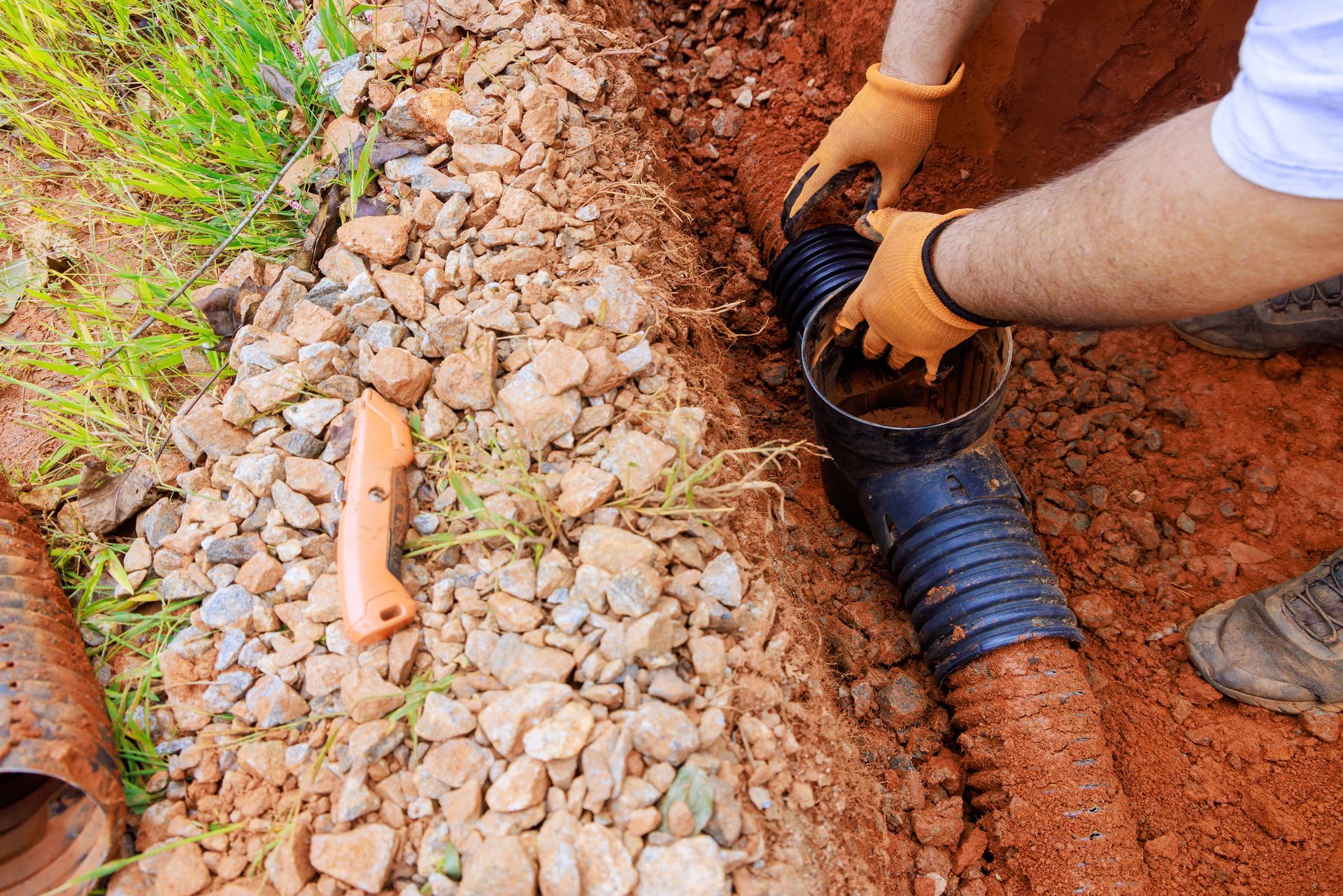
Snow piled in the wrong place can block sightlines at exits, cover fire hydrants, bury catch basins, or cut into parking spaces you need. When it melts, it can run across the lot and refreeze into sheets of ice. A good plan puts snow storage on the downhill side of drainage, away from entrances and walkways, and leaves catch basins open so meltwater has somewhere to go. If your lot already has drainage issues, those tend to get worse in winter, and our guide on how to fix drainage problems explains why.
When Snow Needs to Be Hauled
After big storms, some lots run out of storage space. Ask whether the contractor can relocate or haul snow and how that is priced. Massachusetts environmental guidance discourages dumping snow into wetlands and water bodies because of salt and debris, so hauling should go to an appropriate location.
Salt and De-Icing on the South Shore
Plowing clears the snow, but de-icing is what prevents most slips.
Pre-Treating Before the Storm
Some contractors pre-treat pavement with a salt brine before snow starts. It keeps snow and ice from bonding to the surface, which makes plowing easier and reduces how much salt is needed afterward.
Freeze-Thaw and Refreeze
Near the coast, temperatures often hover around freezing. A lot that looks clear at 4 p.m. can glaze over by morning as meltwater refreezes. Ask how the contractor handles refreeze checks and whether those visits are included in your contract or billed separately.
Protecting Your Landscaping
Heavy salt use damages turf, shrubs, and pavement over time. A contractor who also does
commercial lawn maintenance
sees that damage in the spring and has a reason to apply de-icer carefully along planting beds and lawn edges.
Red Flags to Watch For
Keep looking if a company shows any of these warning signs:
- A bid with no site visit, which usually means the price is a guess.
- No written trigger depth or response time.
- No certificate of insurance or reluctance to name you as additional insured.
- A route full of residential driveways, which compete with your lot for the same trucks.
- Undisclosed subcontracting, so you do not know who is actually plowing.
- No service logs or documentation of visits.
- A price far below the other bids, which often means fewer trucks, longer response times, or corners cut on de-icing.
The lowest bid rarely stays the lowest once you factor in missed storms, emergency calls to another contractor, and the risk of an injury claim.
Get a Commercial Snow Removal Proposal From DGL
If you manage a commercial property on the South Shore, we are happy to walk your site, answer your questions, and put together a clear seasonal proposal before winter arrives. Learn more about our commercial snow removal services and year-round property maintenance, or read what clients say in our reviews.
Call DGL Contracting at (781) 678-4627 or
contact us to schedule a pre-season site walk. We serve commercial properties in Rockland, Hanover, Norwell, Hingham, Weymouth, Abington, and across the South Shore.
Frequently Asked Questions
When should I sign a commercial snow removal contract?
Aim to sign by early to mid fall. That gives the contractor time to walk your property and stake hazards before the ground freezes, and it gives you a better chance of getting on the route of a reliable company before its commercial capacity is full.
What is a trigger depth in a snow removal contract?
The trigger depth is the amount of snowfall that starts service, often one to two inches for commercial lots. Many properties set a lower trigger, or zero tolerance, for entrances and walkways, since those are where slip-and-fall risk is highest.
Is a seasonal snow contract better than per-event pricing?
A seasonal contract gives you a predictable budget and usually priority on the contractor's route. Per-event pricing can cost less in a light winter but more in a heavy one. Most commercial properties prefer seasonal contracts, but check for any snowfall caps before signing.
Who is liable if someone slips on my commercial property?
In Massachusetts, property owners and those who control a property owe visitors reasonable care, including clearing snow and ice. Hiring a contractor does not automatically transfer that responsibility. A clear contract, proper insurance, and documented service logs are your best protection.
Does commercial snow removal include salting walkways?
It depends on the contract. Some companies only plow parking lots, while others include walkway clearing and de-icing. Make sure your contract lists which areas are cleared, when de-icer is applied, and whether it is included or billed separately.
Recent Posts